part 2: Product design system
pattern library

overview
With foundations shipped, I lead the creation of the pattern library. We wrote our own definition, anchored our work on the one CEO-approved prototype, and built 10 reusable patterns.
Role
Senior UX Designer
product
Pattern Library
collaborators
Project manager, 2 ux designers
timeline
1.5 months
constraints
No industry-standard definition to borrow, mid-acquisition chaos, stakeholder friction
the problem
Anaconda's designers had no pattern library to build recurring UI from, so every team solved the same structural problems on their own. That gap became urgent once three companies merged: without shared patterns, the newly combined product risked looking fragmented at the exact moment it needed one unified identity.
Business Need
With three companies now merged, Anaconda needed shared, defined patterns to ship a consistent product identity and speed up delivery in order to save design and engineering time (and company cost) before fragmented, one-off screens shipped across newly combined teams.
User Need
Designers needed a shared reference for building recurring UI so they could ship faster and ensure a consistent identity users could trust.
The constraints

No industry standard definition to borrow
When researching how to define and create a pattern, we found no guidebook nor consistent definition across the industry. We had to write our own definition and figure out the patterns our company needed, which took more time than we thought.
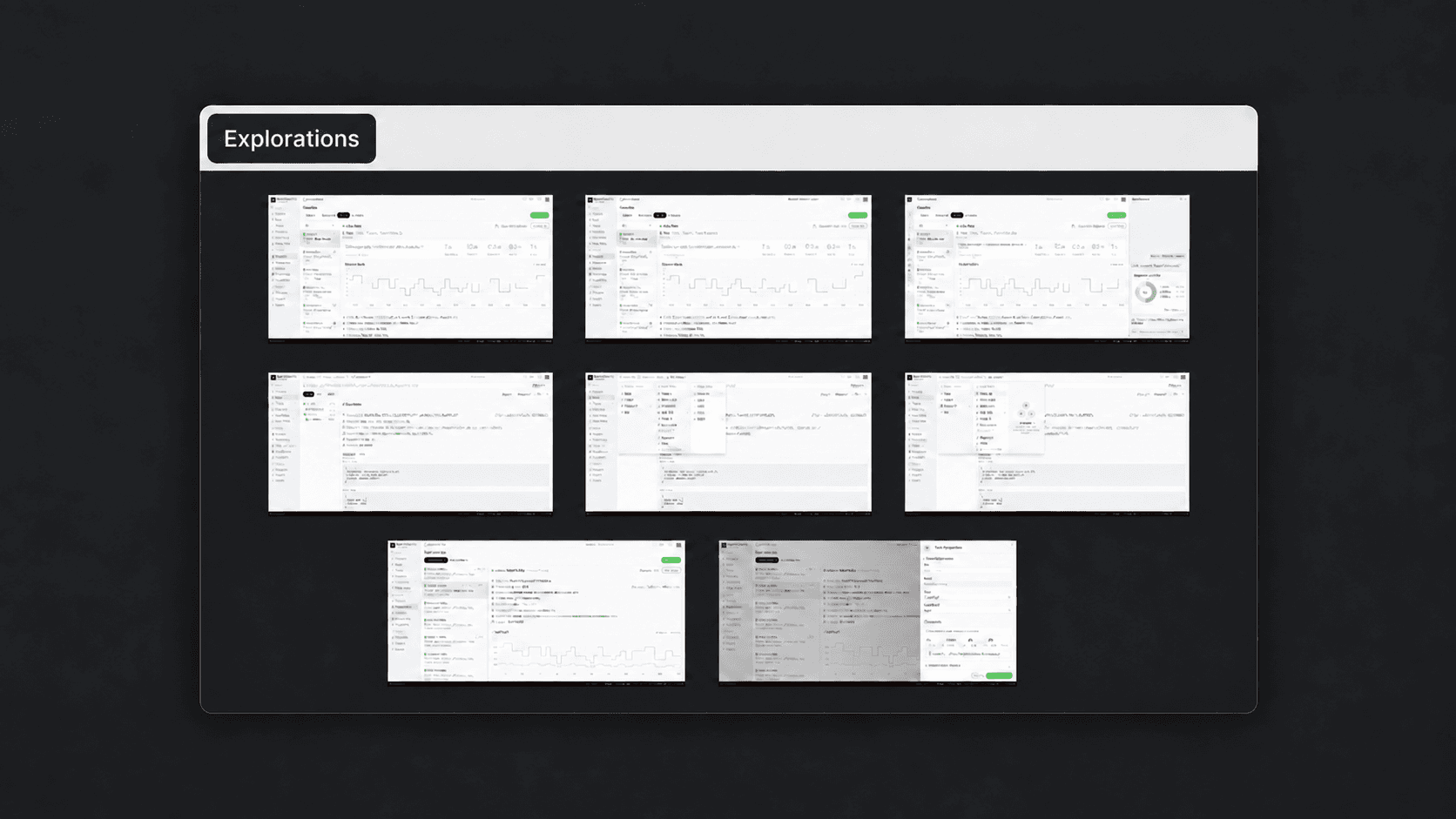
no real screens to build from
With three companies merging and products still being redesigned, there were no finished screens to reference — the platforms themselves were still being figured out. How do you define a recurring pattern when the thing it's supposed to recur across doesn't exist yet?

Stakeholder friction over ownership
A new senior designer pushed to be included in pattern library creation, although ownership wasn't assigned to him, slowing down our pace. I resolved this by giving him part ownership over a content-rules work stream, which better suited to his interest.
research & synthesis
What do pattern libraries look like in the industry?
Before creating our pattern library, I conducted a competitive analysis to see which design systems had patterns, how they defined them, and what they included in them. Then, I led a pattern definition workshop using a Miro Board.
what we learned from our research
loved IBm's definition of pattern.
loved github's differentiation of patterns
appreciated ant's inclusion of "global Rules"
Pattern library competitive analysis

Miro board workshop
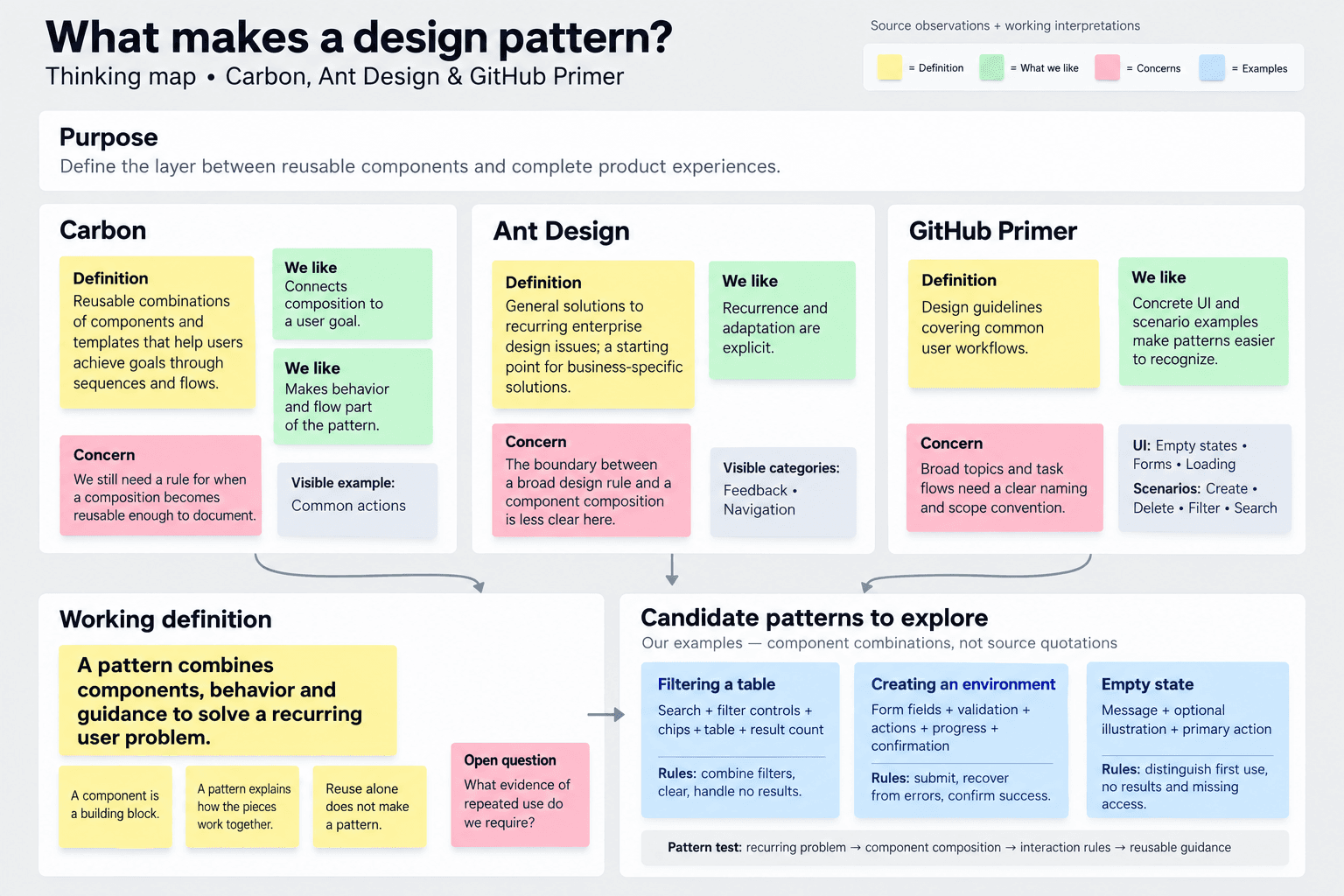
define
creating our definition of a pattern & workflow
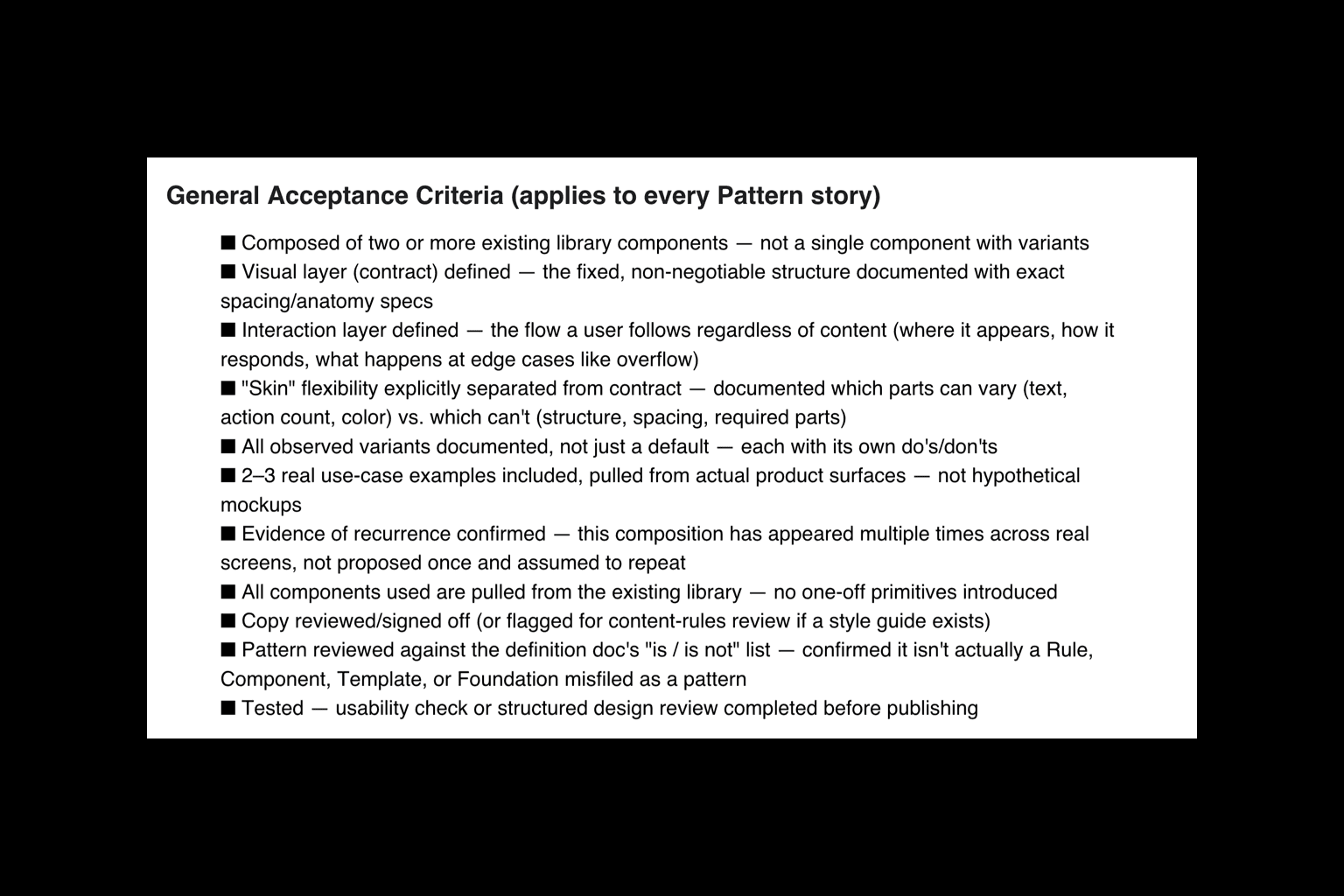
First, we had to ensure that we had our own definition of a pattern. Once that was established, I was able to create acceptance criteria, set up sprints in Jira, and create the Figma file.
Pattern definition and acceptance criteria
Definition of pattern

Acceptance criteria
setting up figma file and screen references
Figma file set up

screenshots of new platform concepts

creating patterns
let the work begin
First, we had to ensure that we had our own definition of a pattern. Once that was established, I was able to create acceptance criteria, set up sprints in Jira, and create the Figma file.
Example: Header pattern
For each pattern, we wanted to include the component, rule, examples, and screens
COMPONENT

variants / Examples
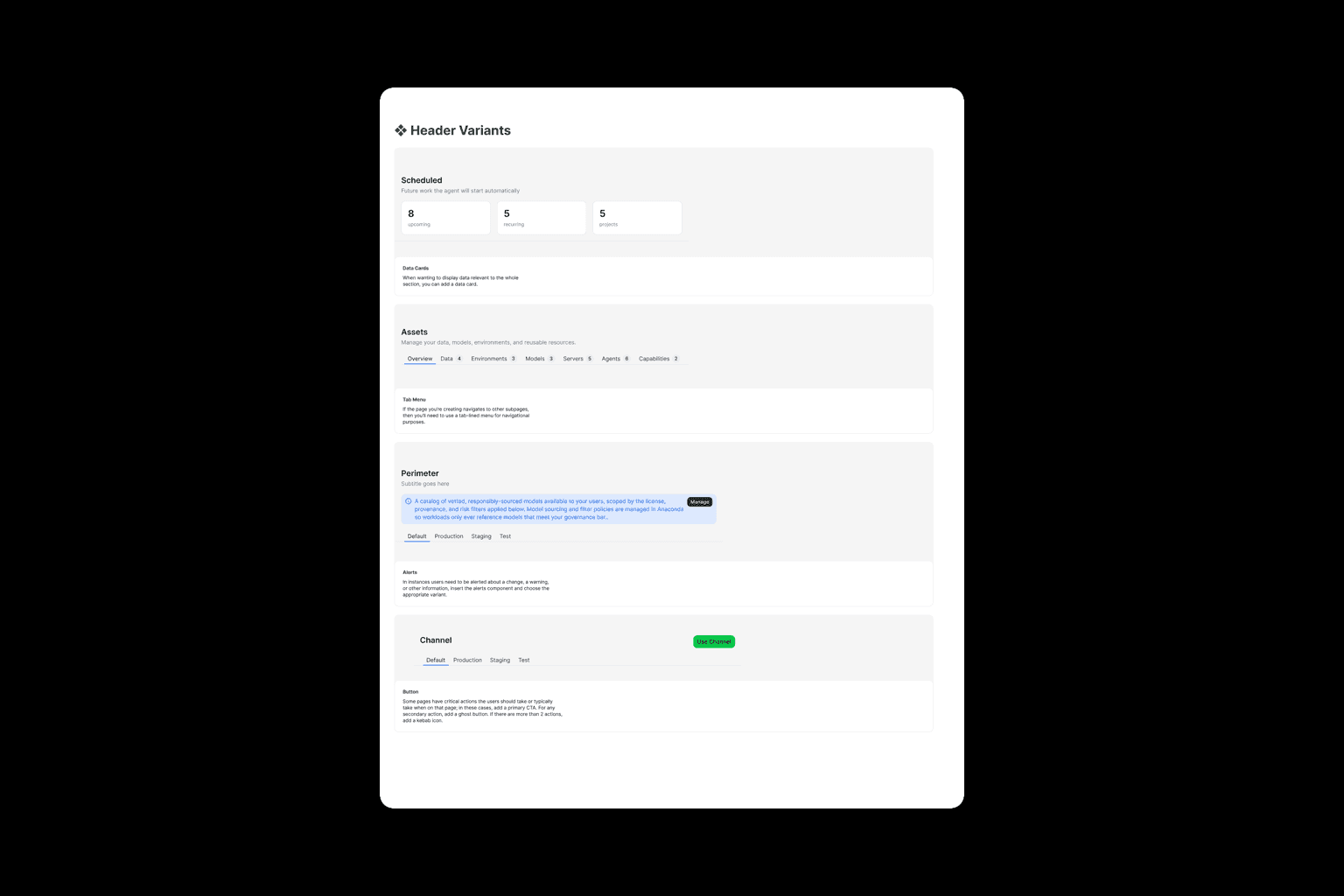
Rules

Screen examples
foundation library handoff
pattern library in progress, always iterating
From this screenshot, we finished the UI patterns and were still refining global rules and other potential patterns.
